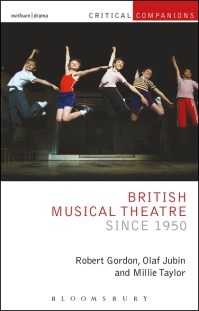
 What is a British musical? That’s a difficult question. Is a British musical a work that premiered in the UK, one that was written by British authors, financed by British money or has a British sensibility? And what on earth is a British sensibility? Since many musical theatre collaborations include creatives, producers or money from all over the place this is an increasingly fraught question. It is one that must be addressed, however, if we are to promote British musical theatre and especially new British writing.
A new book has just been published by Bloomsbury Methuen that contains case studies of 12 British musicals framed by a series of introductory chapters that explore the relationship between musicals and their social and historical contexts.
In the book Robert Gordon, Olaf Jubin and I are arguing that British musicals are different from American ones because of the difference in our social and cultural contexts, which promote different aesthetics in the works and different concerns among audiences. That’s not to say that defining a British musical isn’t complicated, but that in the immediate post-war period and as a result of our post-imperialist and European history we have our own concerns that are reflected in our musicals.
Case studies range from post-war Salad Days (1954) and Oliver! (1960) to global smash hits such as Les Misérables (1985) and The Phantom of the Opera (1986). They include the latest critical and box-office success Matilda (2011) as well as British favourites (Blood Brothers, 1983), cult shows (The Rocky Horror Show, 1975) and musicals with a pre-existing fan-base, such as Mamma Mia! (1999).
 Millie Taylor